Dawn Airey sets out vision for a stronger, more representative and creatively ambitious cultural sector – marking 50 years since landmark publication The Arts Britain Ignores
Chair of Arts Council England, Dawn Airey: “I chose to give my first speech as Chair of Arts Council England in this room, on this subject, because I wanted it to be the clearest possible signal of what I believe my job is actually for.”
Today Dawn Airey, delivered her inaugural speech at The Arts Britain Ignores at 50, a national hosted at Serendipity Institute for Black Arts and Heritage gathering marking the fiftieth anniversary of Naseem Khan’s landmark 1976 report that challenged Britain’s cultural establishment to confront the exclusion and marginalisation of Black artists and culturally diverse communities.

Transcript
Dawn Airey
The Arts Britain Ignores: 50 Years On
Good morning, everyone. It’s a real privilege to be giving the open address at today’s conference, as we begin what promises to be a day of commemoration, celebration, and – I hope – challenge. I’m delighted to be here with you all, and I’m excited to hear what our speakers have to say, and to take part in the conversations that will no doubt unfold.
But before I get down to business, I wanted to start by saying a few words about how it is that I come to be standing here in front of you.
I’ve been Chair of Arts Council England for two months. In that time, I’ve been invited to speak in a great number of places: at launches, at receptions, at conferences, at dinners. So far, I’ve said no to all of those invitations.
Because I said yes to this.
As a new Chair, I believe you have to think hard about what you say “yes” to first. Because you only get to make that choice once. And what you choose tells people very clearly what it is that you think matters – before you’ve said so much as a single word.
And let me be honest with you: I didn’t say yes to today’s conference because it felt like the easy choice. If anything, this is a harder room to stand in front of than most: a room full of people who’ve spent decades doing work that institutions like mine have been slow to fully see, let alone properly fund. But when Pawlet invited me to speak to you today, there was no question in my mind about what my answer would be. This is the room I want to stand up in first, as Chair of Arts Council England. I want to speak to this audience – to all of you –to mark this hugely significant anniversary. And I want to talk about how we got here, and where we go next.
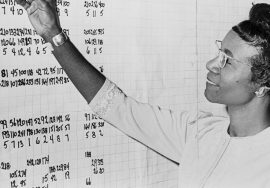
Fifty years ago, a young journalist called Naseem Khan shone a light on the arts practices of those then described as belonging to “ethnic minorities” in this country.
She was asked to find out what was happening. What she found was an indictment of the very people who had asked. The report she produced – the report we’re here to celebrate today – set the Arts Council on a long, slow, winding road: from institutional indifference towards recognition, valuing, and commitment.
I am standing in front of you because I know we’re still on that road today. The journey Khan set us on remains one of the most important our sector is undertaking.
And I wanted my first speech in this job to make clear that it is a journey I am committed to. It will sit at the centre of my work. And I’m inviting you all to judge me: not on what I say to you in this room, but on the actions that I, and the Arts Council, take, and the investments we make, outside of this room. Those are what matter, and those are what I hope we’ll spend time thinking and talking about today.
* * * * * * *
But before we look to the future, let me take you back for a moment to 1974.
That was the year the Arts Council of Great Britain, alongside the Community
Relations Commission and the Gulbenkian Foundation, commissioned Naseem Khan to find out what was actually happening, artistically, in Britain’s minoritised communities. The thinking behind this commission was fairly vague: a sense that it might be a good idea to encourage diversity in the cultural sector.
Her findings were published two years later, in 1976, as The Arts Britain Ignores. Within the pages of her report, Khan painted a glorious picture: of artists, organisations and practices that were vital, vibrant, energetic and multifaceted, from Urdu poetry to Punjabi Bhangra, and from carnival to Cypriot dance.
But if the picture was glorious, the conclusion she drew – and it’s right there in the title – was anything but.
The establishment had thought diversity was something to be encouraged. Khan made clear it was already there. It didn’t need encouragement. It needed recognition.
Britain was home to a whole stratum of extraordinary work, made by extraordinary artists, which the cultural establishment had simply failed to see – or had seen, and had chosen to ignore. The vibrancy of the picture Khan painted only made that ignorance, willed or otherwise, less excusable.
So, The Arts Britain Ignores was more than a piece of research. It was a challenge. And it was aimed squarely at the people who’d paid for it.
It said, in effect: you have built an entire cultural establishment – its funding structures, its buildings, its critics, its canon – around a definition of British art that leaves whole swathes of it out.
At a time when such a challenge was neither expected nor especially welcome, it must have taken real nerve for Khan to say this. But it was exactly what needed saying. She forced institutions like the Arts Council to reconsider not just what they funded, but how they thought: what they counted as art in the first place, and what that said about them.
Fifty years on, that challenge has evolved. But it hasn’t gone away.
* * * * * * *
Now: this is not to say things haven’t changed. They have. In the half-century since The Arts Britain Ignores was published, in fact, a great deal has changed, for the better.
So before we talk about the work we still need to do, I want to acknowledge the work that has been done. And I want to do something I don’t think happens often enough from stages like this one, which is to name some of the people who did that work – people who are here with us in this room.
People like Jatinder Verma, who co-founded Tara Arts in 1977 and spent the next four decades showing what British theatre looks like when it draws on many traditions at once. Baroness Lola Young, who has made the case for Black British culture in universities, at City Hall and in the House of Lords, often in rooms that weren’t ready to hear it. Brenda Emmanus, who as a broadcaster has made sure the work of Black and Asian artists reaches audiences of millions. Dr Susan Croft, whose Unfinished Histories project has rescued the stories of theatre companies that might otherwise have disappeared without trace. And Dr Errol Francis, whose work at Culture& has opened doors into museums and heritage for people who had long been kept outside them.
And a generation that is carrying this work into new places and new forms: Stella
Kanu at Shakespeare’s Globe, Justine Themen previously at the Royal Shakespeare Company and the Belgrade, Parminder Dosanjh at Creative Black Country, artists such as Javaad Alipoor and Principles in further education – Sharon Watson at the Northern School for Contemporary Dance and Josette Bushell-Mingo at the Royal Central School of Speech and Drama.
There are many more of you here today whose names I could add to that list, and I hope you’ll forgive me for not reading out every one.
Alongside this, I want to recognise the work of the Arts Council’s Race Advisory Committee and Disability Advisory Committee – both established in 2020 and made up of members of our National and Area Councils – for everything they’ve done to challenge us, guide us, and hold us to account, against an often very difficult backdrop.
And last but not least, of course, I want to thank Pawlet, whose work at Serendipity has built a permanent home for Black arts and heritage – here in Leicester, and for the whole country. She’s the reason we are gathered here today.
I say all this because it’s easy, at a conference, to talk about “the sector” as though it were an abstraction. It is not. Our sector is made up of people – many of whom took real risks, personally and professionally, to make and support work that was not yet fashionable, fundable, or safe to be associated with. Nor would this Arts Council be the organisation it is today without that generation. That deserves to be said out loud.
But back to those changes. Khan’s report made a real, tangible difference. I’m not going to stand here and tell you that the two-tier sector she found in 1976 – one half properly resourced and visible, the other surviving on goodwill, volunteer labour and sheer resourcefulness – has gone. It hasn’t. Many of you will recognise that picture, because you are still living it. But while the gap hasn’t closed, it has narrowed. Her report gave the artists and communities she described visibility and leverage. And we see its influence in the practices that have entered the mainstream, and in the changes made in cultural policy and public funding in the years that followed.
And just look at what’s grown from the ground she surveyed. The Indian dance she found being taught in community halls now runs through the work of Akram Khan and of Aakash Odedra, whose company is based right here in Leicester. The Black and Asian theatre she found surviving on goodwill has given us companies such as Tara Theatre, founded just a year after her report came out, and Talawa, who are celebrating their 40th anniversary this year. In the visual arts, Autograph has spent nearly four decades putting photographers of colour at the centre of the story, and New Art Exchange, just up the road in Nottingham, has shown what a gallery built with and for its community can become.
And alongside these organisations we have a generation of leaders of astonishing calibre. Mark Sealy, who grew up in the north-east and has led Autograph for more than three decades, becoming one of the most respected curators of photography in the world. Shanaz Gulzar, the Bradford-born artist who became Creative Director of the city’s year as UK City of Culture in 2025. Yamin Choudury, who worked his way up to become Artistic Director of the Hackney Empire. And Indhu Rubasingham, Artistic Director of the National Theatre: the first person of colour and, by the way, the first woman to hold that job. Back at the very start of her career, she was one of the recipients of the training bursaries the Arts Council established in direct response to the recommendations in Khan’s report.
I don’t name these artists and organisations because they help anyone hit a target. I name them because they are among the very best this country has produced. Full stop. And that, really, is what Khan saw in 1976: not a diversity question to be managed, but a wealth of excellence that the establishment had been too narrowminded to recognise.
I want to pause here for a moment, because it would be wrong to celebrate that excellence without being honest about the conditions in which it’s being produced.
This is a hard time to be an artist in this country, whatever your background – but for many people in this room it is harder still. Racism, Islamophobia and antisemitism are part of daily life for too many people in our sector: sometimes in crude and obvious ways, sometimes in subtle and deniable ones, but constantly there.
And people are having to change how they work to accommodate it. Thinking twice about how visible to be. Spending money that should be going into their art on security. Planning journeys home with a new level of care. To keep making exceptional work in these circumstances is nothing short of astonishing – and while I am in awe of your strength, I’m also furious on your behalf.
So let me be emphatic. Those of us who don’t experience this – and I include myself – have a responsibility to stand with you: to stand up for the work you want to make, and to back that with action, not just words. For the Arts Council, that means capturing incidents of racism so we understand the scale of what you’re facing; supporting organisations with the cost of keeping their people and audiences safe; and, above all else continuing to back your ambition to the hilt. You belong in this sector. Your work is valued. And we will make sure that this is never in doubt.
Because funders like us have changed too. It’s taken time, but we’ve put our money where our mouth is. Not enough money – I’ll get to that – but real money nonetheless – which is the best measure of whether an institution’s warm words are backed by anything at all. In our current National Portfolio, 12% of the organisations we fund are led by people from Black, Asian and other ethnically minoritised backgrounds. In 1976, that figure would have been closer to zero.
To be clear: I don’t offer that number looking for applause. I offer it because it is proof of something: that deliberate, sustained institutional choices, about who gets funded and on what terms, can actually shift outcomes, over time, in the real world. That matters enormously.
But it is not a reason to conclude the job is done.
It is an argument for going further.
And this is what I really want to concentrate on today.
That figure of 12% is significant. It represents a real change in how and where the Arts Council invests its money. But. Even on its own, it falls short of where we should be. 12% is well below the roughly 19% of England’s population that identifies as belonging to an ethnic minority. When it comes to the organisations we fund, we are not yet even at the point of representation.
And what’s more, that headline figure hides a lot more than it reveals. It tells you what proportion of NPOs are minority-led – but it doesn’t tell you which organisations have the capital investment to own their own buildings, and which remain permanently, precariously, tenants of somebody else’s. And it doesn’t tell you who is actually on the boards, in the executive suites, and in the commissioning rooms of Britain’s largest and most powerful cultural institutions – the ones with the biggest budgets and the loudest cultural authority – where perhaps progress has been slower than in the wider sector.
Representation has improved a great deal.
Power has moved a great deal more slowly.
And it is power – who decides, who controls the money, who gets to define what counts as art and what doesn’t – that Naseem Khan’s report was actually about, underneath the specific examples she documented. If we mark this 50th anniversary by celebrating representation and stop there, we will have missed her point entirely.
* * * * * * *
I want to tell you a story from earlier in my career, because I think it has something to say about that question of power, and because I want you to have a sense of what you can expect from me in my new role.
In 2015, I took over as CEO of Getty Images. For those of you who don’t know it, Getty is one of the world’s largest image libraries and market places. It is a brilliant company, with a committed team. It supplies photos and videos to media, websites and advertisers around the world, and in doing so it plays a key role in shaping what the world sees. When I joined, the organisation’s mission statement was “We move the world with images”, and one of the first things I was told, with pride, by those who worked at the organisation, was: “we represent the world as it is.” It was a good line.
It also wasn’t quite true.
At that time, Getty was still in the business of presenting photoshopped images of women that played into an airbrushed, filtered, patriarchal version of the world, rather than a truthful one.
So we stopped that. Real women only on our site, in our glorious diversity of shapes, sizes and colour. No more homogeneity.
If you searched for family – the first page of results would invariably be images of allwhite, heterosexual families. We changed that, too, so that all families would be able to see themselves in the results.
My simple view is: if you can’t see it, you can’t be it…
Then I looked at the organisation’s leadership, and I noticed something else that sat uneasily next to that claim of “representation”. Every single person on the leadership team was white. And at my second all-staff meeting, this was raised directly by colleagues. I was told, with what I know was real sincerity, that the senior non-white talent we would need for a genuinely diverse leadership team was very hard to find.
I said: Look harder.
And then I set a target – that our executive would be 25% diverse. Because I have learned, in my career, that good intentions without a number attached to them have a habit of evaporating somewhere between the meeting room and the following year’s results.
We hit that target.
I’m telling you this story for three reasons.
The first is that, although running a global photo agency and funding the arts in this country are obviously very different jobs, there’s a lesson in there that I think transfers directly. “We represent the world as it is” is exactly the kind of thing cultural institutions like to say about themselves. And in my experience, the gap between that claim and the reality doesn’t close just because enough people mean well.
The second is that I want you to know this agenda isn’t something I’ve picked up along with the job. It’s something I’ve cared about, and acted on, for many years: long before anyone invited me to stand up in a room like this one.
And the third goes back to the question of power. Being Chair of Arts Council England is a powerful role. In a speech about power, it would be strange to pretend otherwise. So I think the most useful thing I can tell you, two months in, is how I intend to use that power.
I’ll use it the way I used it at Getty. By noticing who isn’t in the room, and saying so out loud. By refusing to accept “they’re not out there” as an answer. By setting targets, rather than describing aspirations, and by holding to them. By saying all of this plainly, and repeatedly, long after the first meeting is over. And by asking, constantly, how power can be shared rather than shielded – starting with my own. * * * * * * *
So with all of that in mind, I want to begin my term as Chair of the Arts Council with a clear commitment.
The current levels of investment in diverse-led organisations cannot – and must not – be a high-water mark. Of course, we commit to sustaining those levels. But we won’t just protect them or sustain them. We will build on them and grow them.
Last month, we published the guidance for our next National Portfolio Investment Programme. It will run for five years from April 2028 through to March 2033.
The guidance is unambiguous about the two areas we will prioritise in our decisionmaking.
In the upcoming NPO round, we will stand ready to increase our investment in organisations that grow opportunities for “a wider range of people in more places to experience excellent culture and develop their creative potential”.
And we will aim to increase our investment in organisations “whose governance and leadership is more representative of England’s population”.
My commitment to you is: we will deliver on that.
It will not be easy. We know already that there will be huge demand for investment from brilliant arts organisations, museums and libraries right across the country. And we know we will not be able to satisfy that demand, because money remains very, very tight.
I’m telling you that today for context. I am not offering it up as an excuse.
These pressures will need to be navigated. But the commitment we have made, in public, to invest in organisations that better represent the country we all live in will be honoured. In this work, we know that we can count on the support and guidance of our Race Advisory and Disability Advisory Committees. We also know that they’ll hold our feet to the fire on this if they need to.
Alongside this, we will keep looking for new solutions to longstanding problems. I’ve already described some of those problems: organisations whose funding is too low to lift them out of financial precarity; brilliant companies that own nothing of their own, and so are always one difficult year away from disappearing; and the boardrooms and executive suites of our largest institutions, where change has been slowest of all. As you know, these are old problems. That is exactly why they need new answers.
We will ask every organisation we invest in to commit to inclusion in its own work:
not as somebody else’s specialism, safely quarantined from their day-to-day business, but as part of what it means to receive public money.
We will be ambitious for every part of our sector: for the small, community-rooted organisations of the kind Khan wrote about in 1976, as well as for the institutions with the biggest budgets and the loudest voices.
And, last but by no means least, we will hold ourselves to account. We can’t ask others to look harder while we look away. The Arts Council’s own diversity – in our colleagues, on our Council, and in the decisions we take – must reflect the country we serve.
I’m pleased to tell you, by the way, that I don’t need to set a target of 25% diversity among the senior leadership of the Arts Council, as I did at Getty – 35% of our senior leadership team already identifies as Black, Asian, or Ethnically Diverse. And one of our internal success stories over the last five years has been the growing diversity of our Area Councils – the decision-makers who will directly oversee our next NPO round – who are now more representative of England than ever before. But that’s far from job done. During my term as Chair, I am committed to building on this work, and ensuring that the internal culture of the Arts Council, and the talent pipeline it fosters, means that diversity sits within its bones, rather than being skin-deep.
That is my commitment to you. None of it is complicated to describe from a stage. All of it is hard to do. But it is the work Naseem Khan set us fifty years ago, and it is the work I intend to be judged on.
* * * * * * *
I’m nearly at the end of my time with you this morning, but before I wrap up and hand to the next speaker, there is one more subject I want to touch on. I think it gets far less attention than funding and representation, but it matters every bit as much. That subject is memory.
So much of what Naseem Khan documented in 1976 survives today only because someone, somewhere, refused to let it be forgotten – kept the flyer, the photograph, the programme note, the reel of tape, long before anyone official thought to ask for it.
We’re standing today in the Serendipity Institute for Black Arts and Heritage. Their Living Archive consists of history that was kept in shoeboxes, in attics, in the corners of front rooms – and then passed down through generations of families. Their recent project celebrating 100 Black women who deserved wider recognition drew on exactly that kind of memory: community knowledge, not official record.
Today’s conference, of course, is its own act of remembering – of one remarkable woman, and the work she made impossible to ignore. And I’ve found myself wondering what she would make of this room, if she were sitting here with us this morning.
I suspect she would be pleased by parts of it – pleased to see how many of the artists and organisations she once had to go looking for, because nobody else was looking, are now part of how this country understands its own culture.
But I imagine she would also ask, fairly sharply, why a report written fifty years ago is still being cited as a live diagnosis in 2026, rather than read as a piece of settled history.
And I think she would tell us not to mistake this conference – however important, however necessary – for the work itself. Anniversaries are for taking honest stock. They are not, by themselves, an achievement.
I don’t want to put any more words in her mouth. But I’m certain of this much. Today is an important day – but what matters most is what happens when we leave this building.
So I’m going to end with an ask of you.
Do not let today be the last time this conversation happens. Tell us, honestly, where our investment still isn’t reaching. Point us towards the archives and collections that need support before they are lost for good. And hold my organisation, and me personally, to account for every commitment I have made this morning – because a promise made at a lectern is worth nothing unless somebody is checking on it afterwards.
I meant what I said when I began. I chose to give my first speech as Chair of Arts Council England in this room, on this subject, because I wanted it to be the clearest possible signal of what I believe my job is for. And I intend to come back to you – not to deliver the same speech again, but to report honestly on what has moved, and what has not. You have my word on that.
Thank you.
ENDS